
Searching for a Warrant in Hartley County
There is no public all-court warrant database for Hartley County. Start with the county Justice Court's dated active-warrant listing for its traffic and Class C cases. Use iDocket to look for county or district case events, then ask the County Clerk or District Clerk about any warrant notation. A city citation needs a direct check with Dalhart City Court or Channing Municipal Court.
Record the court name, case or citation number, and date before calling. A search hit can be old, incomplete, or tied to a different person with a similar name. Ask a lawyer for advice before acting on a possible arrest warrant.
- Open the Justice Court page and review the PDF date and court header; it has no live search box.
- Use iDocket's free name search with Texas, Hartley County, and the litigant name. Partial names are allowed.
- Call the court printed on the citation. For Dalhart or Channing matters, contact that municipal court directly.
- For a recent THP citation or reported FTA/FTP issue, use the matching DPS tool and follow its court-contact instructions.
- If a record is not online, send a written request to the responsible department. Confirm any possible warrant with the court before appearing.
Hartley County's Justice List Has a Narrow Scope
The county PDF is a Justice Court snapshot, not a Sheriff's Office search and not a list of every warrant in the county. It identifies the court in its header and displays name, cause number, citation date, offense description, and total amount. It does not show a person's date of birth, a bond label, a serving officer, or a row-level status change.
Search the PDF only for your own matter or a family member's case. If a name appears, call the Justice Court at 806-244-2939 and ask whether the entry remains active. A name missing from this list may still have a matter in a city, county, district, family, or federal court.
The iDocket service overview shows the separate name, calendar, case-number, and advanced search choices available to participating courts.

Those menu options do not turn iDocket into a warrant-status system; ask the issuing court to confirm any possible match.
Warrant Search Fields Explained
Hartley has several different lookup formats, so the fields depend on the source. The Justice Court PDF is a static table. iDocket's free name search uses state, county, and litigant; the detailed cause-number and advanced paths may be subscriber-only. DPS asks for identity details only for its own limited traffic tools.
| Source or Field | Format | Required | Coverage note |
|---|---|---|---|
| Justice PDF: CAUSE # | Printed column | No form | Format legend is not published. |
| iDocket: State and County | Select fields | Yes | Select Texas, then Hartley County. |
| iDocket: Litigant | Name text | Name search | Partial names are allowed; verify with the clerk. |
| Texas FTA/FTP | DL number and DOB | Yes | Reported offenses only, not a full warrant search. |
| THP citations | DL/ID, DOB, first and last name | All fields | Recent THP citations only, generally within 24 months. |
Hartley County Search Results Need Court Review
An online case entry is a clue about a court event, not a guarantee that a warrant is active today. iDocket says the service is independent and does not warrant the accuracy, timing, or completeness of its data. A Justice PDF is also date-stamped. Ask the clerk whether an FTA entry became a warrant, whether a capias pro fine was issued after judgment, or whether a collections-only notice has no printed warrant.
Keep the cause number and date at hand. The same question can route to different offices depending on whether the underlying matter is a JP citation, a city ordinance case, a county misdemeanor, or a district case.
The iDocket help page describes the name and case-number search paths and the limits on advanced access.

The provider's own page describes search access, but the clerk remains the source for a current court record.
What a Warrant Search Shows
A Hartley Justice Court match gives a small set of useful identifiers, but not enough to decide bond or current status without the court. Read the date and offense text along with the cause number. “Total Amt” is a case amount and should not be treated as bail.
| Cause number | CAUSE # The public list shows a cause/citation identifier without a format key. |
|---|---|
| Citation date | The list says “Cite Date,” not warrant issue date. |
| Offense | Text description may include traffic, FTA, or promise-to-appear language. |
| Total amount | “Total Amt” is not identified as a bond amount. |
| Issuer and status | Court details are in the PDF header; no row status field was observed. |
Hartley County City Courts Keep Separate Records
Dalhart City Court handles the city's ordinance and fine-only traffic matters. Its public page says warrant cases may not qualify for online payment and directs people to contact the court. Channing Municipal Court has no public warrant search located; the Texas OCA directory lists its phone, mailing address, and email. A city result will not necessarily appear in the Hartley Justice Court PDF.
For Dalhart, call 806-244-5511. For Channing, call 806-235-0811 or write to P.O. Box 34, Channing, TX 79018. Identify the citation court before sending a request or payment.
Where to Check Warrants in Hartley County
The Justice Court maintains the dated active PDF. County and District Clerk pages provide iDocket access for the respective court records. The municipal courts hold local city cases. The Sheriff's Office lists public contacts but no warrant portal or dedicated warrant phone line. If you cannot tell which court is involved, ask the sheriff or clerk to identify the correct office.
Texas TCIC is a law-enforcement system, not a public self-search site. DPS's FTA/FTP tool covers certain court-reported offenses and license-renewal compliance; it does not cover every criminal warrant. A complete check for your own matter may require several calls and a written public-information request.
The Hartley County Clerk page identifies the office that maintains county-level records and voter registration.
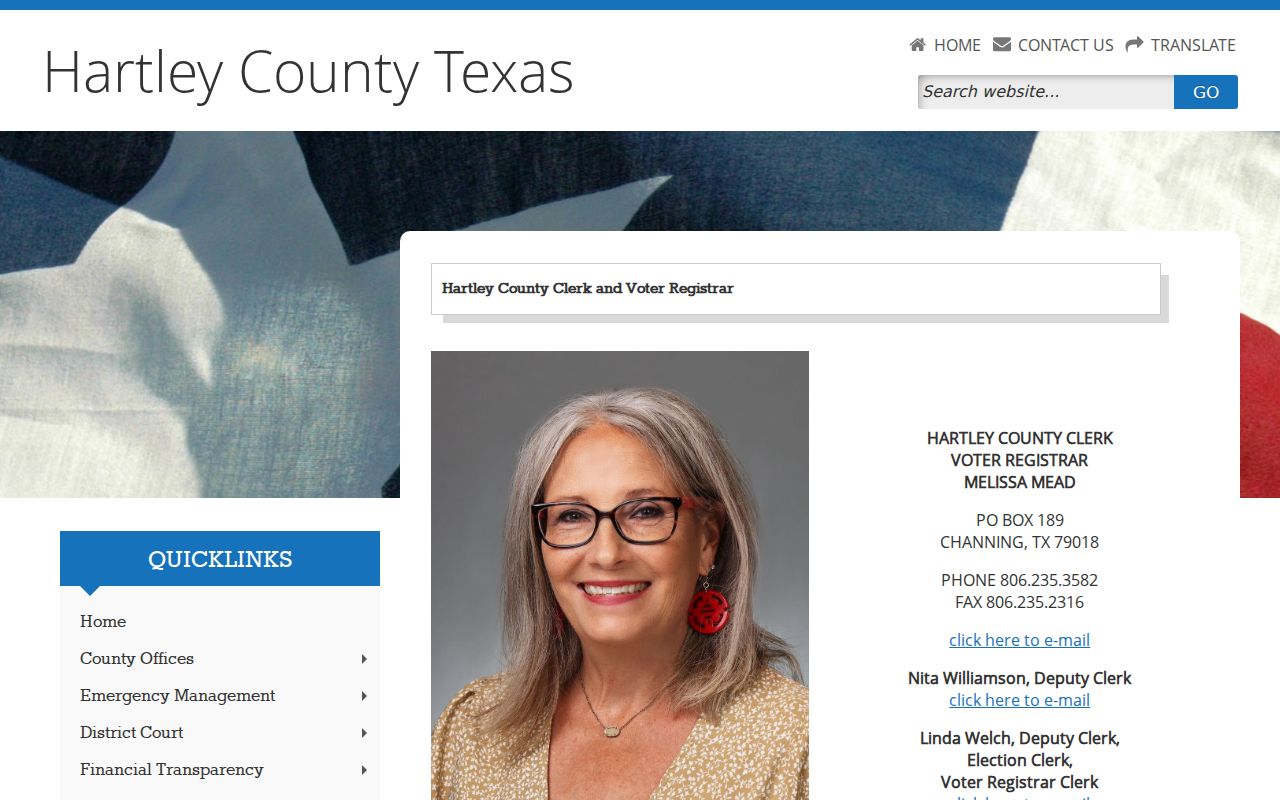
County Clerk contact information helps route a record request; it does not show whether an individual warrant is active.
Hartley County Sheriff Search Is a Contact Route
No Hartley Sheriff warrant-search interface was found on the county or sheriff pages. The county contact listing gives 806-235-3142 and the newer sheriff site lists 806-244-5544 for public reporting contact. These are general office routes, not a promise of 24-hour warrant confirmation. Ask whether the matter belongs with the sheriff, an issuing court, or the shared jail dispatch.
County public-information requests must be written and sent to the department that holds the record. The request page permits mail, fax, or in-person delivery and asks for enough detail to find the file.
Restricted Warrants and Access Rules
The Texas Public Information Act applies to public government records, subject to exceptions and other confidentiality laws. Executed arrest-warrant material is public under Article 15.26. Search-warrant affidavits generally become public after execution, with legal limits. Juvenile arrest-warrant records have a separate confidentiality rule.
Key Rules:
Sealed or unserved papers may not be available through a public search.
Texas Family Code §58.010 makes a child's arrest warrant and supporting complaint confidential, subject to statutory exceptions.
A missing result can reflect a different court, a newer record, or restricted material; ask the issuing court to confirm.
Hartley County Written Requests Need Detail
When a search and phone call do not answer a question, Hartley County accepts written public-information requests by mail, fax, or in person. Send the request to the department that holds the record. The county does not provide a warrant-specific online form or a fixed fee or turnaround schedule.
Include the court, date range, record type, full name, and cause or citation number if known. For a sheriff file, use the Sheriff's Office route; for a JP file, contact Justice Court. County and district case requests go to the relevant clerk.
Hartley County's public-information page lists its request methods and department routing.
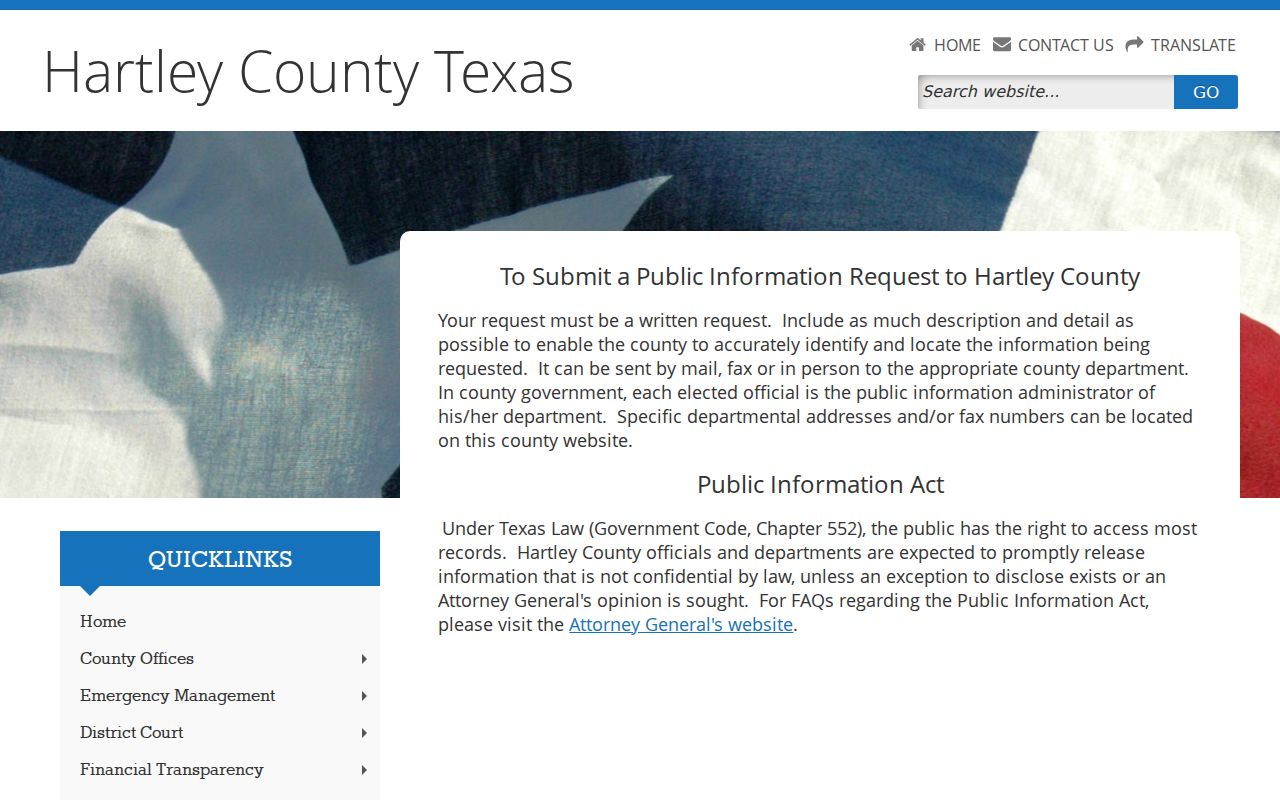
A written request seeks an existing record; it does not replace urgent direct confirmation by the court.