
Checking for a Warrant in Hartley County
Where you look first depends on which court the case sits in. A Hartley County traffic or Class C matter starts with the Justice Court's active-warrant list, a dated PDF tied to that court alone. For anything in County Court or the 69th District Court, the County Clerk and District Clerk route you to iDocket for case activity. Keep in mind that a docket history is not a live warrant confirmation. A Dalhart citation belongs with Dalhart City Court. A Channing citation goes to Channing Municipal Court. The sheriff posts no public warrant-search portal, so when the law-enforcement route is unclear, use the Sheriff's Office; otherwise call the right court first. Before you dial, have your facts ready. Gather your full legal name, date of birth, citation or cause number, and the likely court. A blank search result proves nothing; only the issuing court can confirm whether a warrant exists. If a record hints at an active arrest process, talk with a Texas attorney before you decide when and where to appear in Hartley County.
- Open the Justice Court page and note the date on its active-list PDF. Use it only for the Justice Court slice.
- Search iDocket by name for County or District Court case activity, then ask the clerk about any warrant or capias notation.
- For a city citation, call Dalhart City Court or Channing Municipal Court directly. Neither has a complete public warrant list located in the research.
- For a recent Texas Highway Patrol citation, use the DPS citation tool; for reported FTA or failure-to-pay status, use the limited Texas FTA/FTP service.
- Confirm status, bond, and next steps with the issuing court. Consult an attorney before an appearance or surrender.
Hartley County Has Separate Warrant Channels
Hartley County splits its warrant work across several offices. Channing holds the courthouse, most county offices, and the Sheriff's Office, while the Justice Court and a sheriff annex sit over in Dalhart. Dalhart also runs its own City Court and Police Department. Those are separate channels. A city ticket starts in that city's court. A Justice Court citation stays with the county JP. The 69th District Court sits in Dumas and serves Hartley County with three other counties. The Hartley County home page names the county's public offices and the courthouse, and it works as a directory of department links rather than a warrant search. A building's address will not tell you which court issued an order. Route the question by the citation, case number, or notice. That named court gives the current answer.
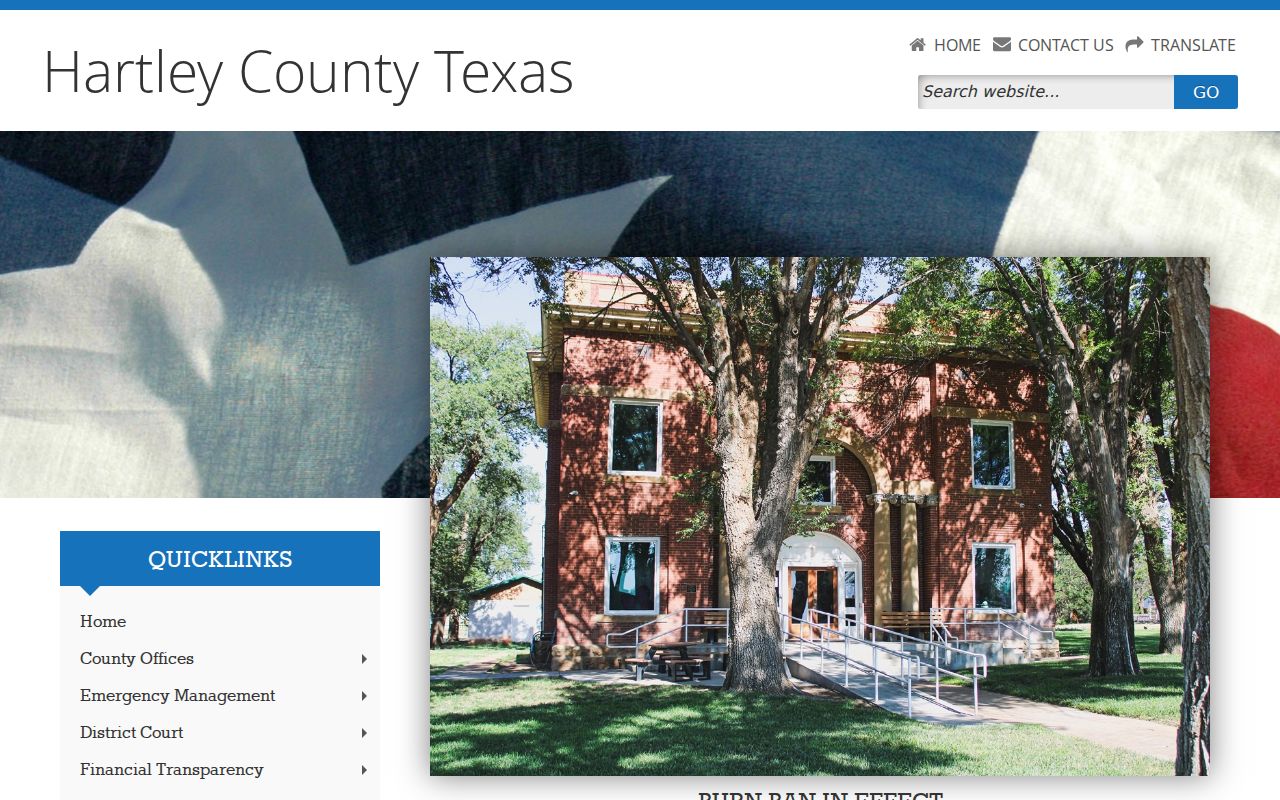
Use the Hartley County site to pull department contacts, then let the issuing court confirm any warrant before you act on it.
Hartley County Warrant Types
Hartley County records use several legal terms for process that directs an officer to act or returns a person to court. The reason behind the order matters as much as the label. A traffic FTA is one thing. A capias pro fine after judgment is another. Neither is a felony arrest warrant.
| Warrant Type | How It Arises | Who Issues It |
|---|---|---|
| Arrest warrant | Magistrate order based on a complaint or oath | Authorized judge or magistrate |
| Bench or FTA process | Missed setting or promise to appear | Court handling the case |
| Capias pro fine | Post-judgment unpaid fine or costs | Justice or municipal court |
| Search warrant | Search or seizure based on sworn probable-cause facts | Magistrate under Chapter 18 |
Hartley County Warrant Search Uses More Than One Tool
iDocket is the case-records tool both Hartley County clerk offices point to. A free name search covers it. You can enter a state, a county, and a litigant name, even a partial one. Case-number and advanced search options may require a subscription, so treat the free tier as a starting point. The county announced iDocket access in 2020, and the vendor calls itself independent while warning that its information may not be accurate, timely, or complete. A docket can show filings and court dates. It does not promise a current warrant-status field for every Hartley case, though. When a docket entry matters, call the County Clerk for county-court matters or the District Clerk for 69th District Court records. The iDocket search menu lays out the name, cause-number, calendar, and advanced-search routes, and its help page explains the field rules.

iDocket can surface a Hartley County case history, but the clerk's office confirms what the current court file actually says.
Inside a Hartley County Warrant Record
The public Justice Court listing is candid about its limits. Each row carries a cause number, citation date, offense description, and total amount. The listing shows no row-level status. No bond type or bond amount appears. The total is not a bond quote, and the court name, judge, address, and phone sit in the header rather than beside each entry.
| Cause number | CAUSE # The county does not publish a suffix legend. |
|---|---|
| Name | Violator name appears; the inspected schema has no date of birth or photo. |
| Offense | Free text, including traffic, failure-to-appear, or promise-to-appear wording. |
| Cite date | Date of the citation, not a separate warrant issue date. |
| Total amount | Shown as “Total Amt”; not labeled as bond. |
| Status and bond | No per-row active, recalled, served, or bond field was observed. |
Hartley County Warrant Record Dates Need Checking
The Hartley County Justice Court has posted active-list PDFs dated April 9 and May 20, 2026. Those dates show the file changes. The county promises no daily or weekly update cycle, and the May file runs 157 pages. Length alone is not a warrant count. Confirm with a clerk. A copy pulled later may still need a Hartley County clerk's word before anyone acts on it. Read the header for the court name and list date. Then compare the cause number and citation date. If a row appears, ask the Justice Court whether it remains active and what the amount means. If no row appears, keep going, because municipal, county, district, family, or federal process may sit with the court that handled the matter.
Issuing and Serving Warrants in Hartley County
A judge or magistrate issues a warrant, and an authorized peace officer serves it. Hartley County's Justice Court and municipal courts handle fine-only and traffic matters within their own roles. County Court takes county-level misdemeanors. The 69th Judicial District Court serves Hartley County along with Moore, Dallam, and Sherman Counties. The Sheriff's Office is the county's law-enforcement contact. Its public pages name no warrant unit. No dedicated warrant phone line is listed either.
Hartley County Sheriff's Office
900 Main Street
Channing, TX 79018
806-235-3142
Hartley County Sheriff Contact Is a Routing Step
Start any Hartley County warrant search with a phone call. The Sheriff's Office keeps its main office at 900 Main Street in Channing and a Dalhart annex at 1401 Walnut. The county page lists 806-235-3142. The newer sheriff site adds 806-244-5544 for public reporting. There is no separate warrant unit, no public warrant line, and no online sheriff search. So ask which court or agency holds the record before you drive anywhere. For a law-enforcement matter, the sheriff can point you to the next contact, and city citations belong to the city court. The shared Dallam-Hartley Jail/Dispatch number is 806-244-2541. That page posts no bond-window hours and no public warrant lookup. The county Sheriff page carries the public office contact but no searchable warrant roster.
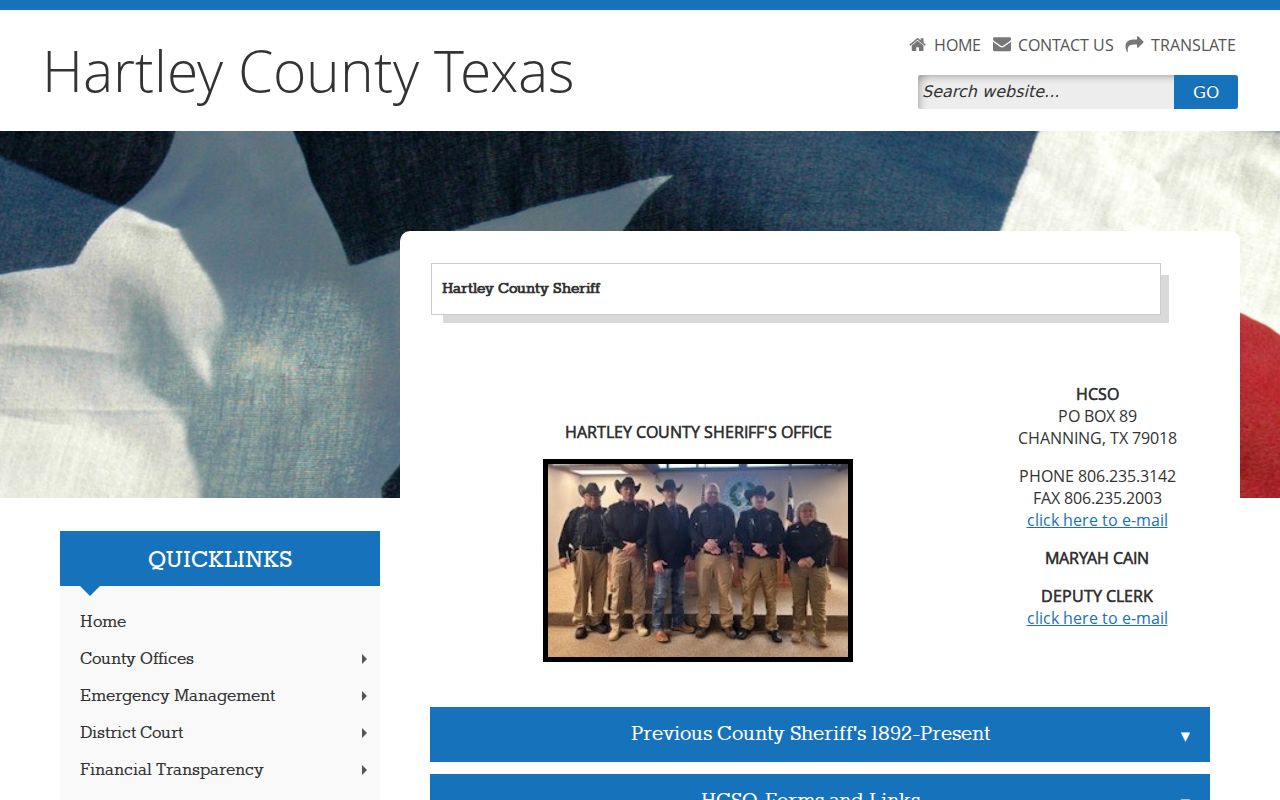
Hartley County's sheriff can route a law-enforcement question, but only the issuing court can confirm its own warrant record.
If You Have a Warrant in Hartley County
Hartley County warrants start at the issuing court. Call before you pay or travel. Local pages post no universal surrender window, bond schedule, or recall form. Reach out to the Justice Court, the city court, or the County/District Clerk. Ask whether the record is an arrest warrant, a capias pro fine, or an Omni/collections-only item. Get the current amount too. Confirm your next appearance, the accepted payment method, and whether a judge must act before the record clears. A lawyer can contact the court, check whether bond or a voluntary appearance is available, and ask about a motion to recall or quash. One payment may not end the case or lift every hold. Keep your receipt or any written court order. Then ask whether another date remains.
Important: Before appearing or surrendering, ask an attorney and the issuing court to confirm the warrant, location, bond terms, and next step.
Hartley County Omni Notes Do Not Prove a Warrant
The Justice Court's April and May PDFs carry a telling line: “OMNI & COLLECTIONS ONLY: no warrant printed.” That wording separates a reported failure-to-appear or collections issue from a printed arrest warrant. A driver-license renewal hold may still need attention. Still, it does not prove an arrest order exists everywhere. Try the Texas FTA/FTP service. It offers a limited reported-status check for Hartley County drivers. Then contact the court that reported the matter. DPS says court updates can take three to five business days. Each tool covers different records. The Justice Court, municipal court, and DPS systems do not overlap, so one clear result is not a countywide answer. Ticket-specific lookup steps and limited state tools sit in the traffic-warrant section.
Hartley County Warrant Records and Public Access
Texas opens government records through the Public Information Act, Government Code Chapter 552. Hartley County departments must release records unless a confidentiality exception applies. The county wants your request in writing. Send it by mail, fax, or in person to the department that holds the record. Name the court and the date range, and ask for a fee estimate if copies may be needed. No warrant-specific fee is posted. Expect no fixed response time either.
Key Rules:
Texas Government Code §552.021 generally opens public government records unless an exception or other law applies.
Texas Code of Criminal Procedure Art. 15.26 addresses public access to arrest-warrant materials after execution.
Texas Family Code §58.010 keeps a child's arrest warrant and supporting papers confidential, subject to statutory exceptions.
Hartley County Court Records Need a Specific Request
Hartley County court records need a written request. Send it to the department that holds the file. Give enough detail to find an existing record: likely court, record type, date range, full name, and cause or citation number if known. The county publishes no warrant-request form, fee schedule, or fixed turnaround for this record type. Sheriff records go through the Sheriff's Office contact. Justice Court material goes to the JP at 1401 Walnut in Dalhart. County Court and 69th District Court case records sit with the County Clerk or District Clerk. A written request is slow. For urgent warrant status, phone the court instead. Hartley County's written request instructions explain how to route a request by mail, fax, or in person.
Hartley County Warrants by City
Dalhart, the largest city in Hartley County, counted 8,447 people in the 2020 Census. City citations go to Dalhart City Court. Hartley Justice Court is a separate county channel in Dalhart. Channing is much smaller. Its 2020 population was 281, and the Texas Office of Court Administration lists its own municipal court. Hartley CDP, also in Hartley County, has no separate municipal court or police department of its own.
Dalhart Warrant Search
8,447 residents in 2020 · city court and police contacts
Channing Warrant Search
281 residents in 2020 · direct municipal-court contact
Hartley County Warrant Records Have Public Limits
Texas law treats warrant records differently by type. Article 15.26 opens executed arrest-warrant records to the public. A search-warrant affidavit generally becomes public once the search warrant is executed. Juvenile files are another matter. Family Code §58.010 keeps a child's arrest warrant and supporting complaint confidential, subject to listed exceptions. There is no single all-court search tool. Hartley County courts keep some records sealed or unserved, and a public list may not show them. Ask the issuing court what can be released and whether the case has a separate public docket.