
Hartley County Arrest Warrants Explained
Under Texas Code of Criminal Procedure Article 15.01, an arrest warrant is a written order from a magistrate. It directs a peace officer or a named person to arrest the person accused. The application may rest on a sworn complaint or on oath. A capias pro fine is different. That one is a post-judgment tool for unpaid court costs. Hartley County matters can begin in district, county, Justice, or municipal court. The charge and jurisdiction decide which. A traffic citation in Dalhart never becomes a 69th District Court file just because a warrant is involved.
Hartley County Magistrates and Issuing Courts
Two courts issue most process in Hartley County. The 69th Judicial District Court serves Hartley, Moore, Dallam, and Sherman Counties as the district trial court. Beneath it sit the Hartley County Court, which handles county-level misdemeanors, plus the countywide Justice Court and the Dalhart and Channing municipal courts for lower-level matters. Texas judges and magistrates may issue process where state law allows. For a felony or a district filing, the District Clerk is the clerk to contact. Misdemeanor records filed in county court run through the County Clerk instead. Depending on the process and the legal basis, a court may issue a summons or a warrant. Ask the clerk which document your case actually contains. The 69th District Court contact page lists the court's Dumas location and public phone.
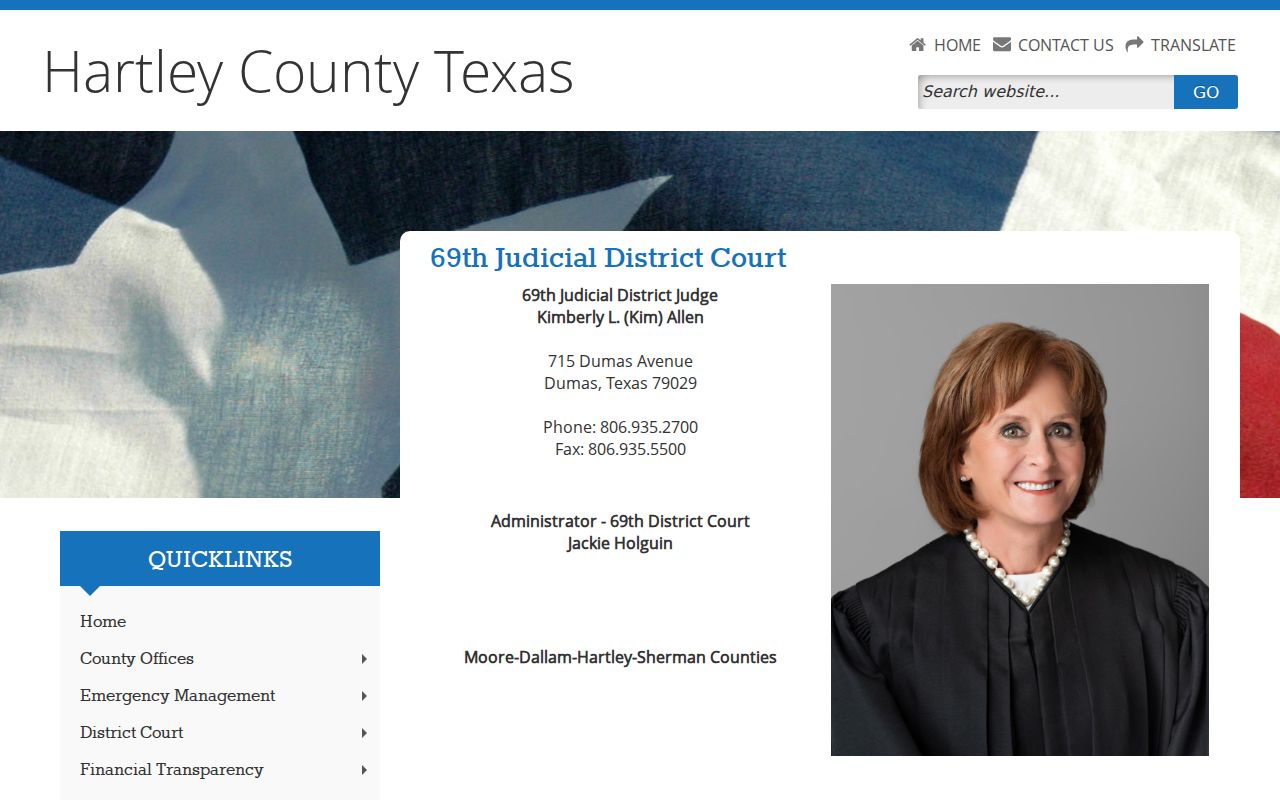
The district court spans several counties, while Hartley County's lower courts stay separate local record channels for their own cases.
Inside a Hartley County Arrest Warrant
Texas law sets required identifying details for a warrant. Hartley County has published no sample felony warrant portal and no uniform public record layout. The county Justice PDF is a lower-court listing. It should not be read as proof that every arrest warrant exposes the same fields.
| Process identifier | CAUSE # A cause or warrant number links the paper to its case. |
|---|---|
| Accused name | Name or a legally sufficient description identifies the person. |
| Offense | The order states the alleged offense; the Justice PDF uses free-text offense rows. |
| Issuing authority | Magistrate and office are identified on the order. |
| Supporting facts | Complaint or affidavit reference may support issuance; access can depend on execution and other law. |
| Bond and service | Amount, type, issue date, and return details require the court record; no local public sample was located. |
Hartley County Warrant Records Open After Execution
Article 15.26 makes an arrest warrant and its supporting affidavit public information. After execution, the magistrate's clerk provides copies for inspection during normal business hours, subject to confidentiality law. Not every unserved warrant is searchable online. A sealed record or juvenile matter can stay restricted. Search-warrant affidavits follow a separate rule under Article 18.01(b). Those affidavits generally become public once the search warrant is executed, which is document access after a search rather than a warrant lookup tool. Texas Article 15 sets the arrest-warrant record rule. The Article 18 text covers search warrants.
Hartley County readers should treat Article 18 as the search-warrant rule, not as an arrest-warrant lookup.
Serving Arrest Warrants in Hartley County
The Hartley County Sheriff is the main county law-enforcement contact. Dalhart Police serves city functions. Texas law allows authorized peace officers to execute a warrant statewide. The county has no separate warrant division, constable page, or city-marshal contact. Ask the issuing court which agency holds the paper. After an arrest, Article 15.17 requires prompt magistration, no later than 48 hours. The shared Dallam-Hartley County Jail/Dispatch number is public. Its page lists no booking or bond hours. Confirm custody and release steps with the court or jail.
Hartley County Sheriff and Dalhart Police Have Different Roles
The Hartley County Sheriff's official page posts office contacts and links to the HCSO forms page.
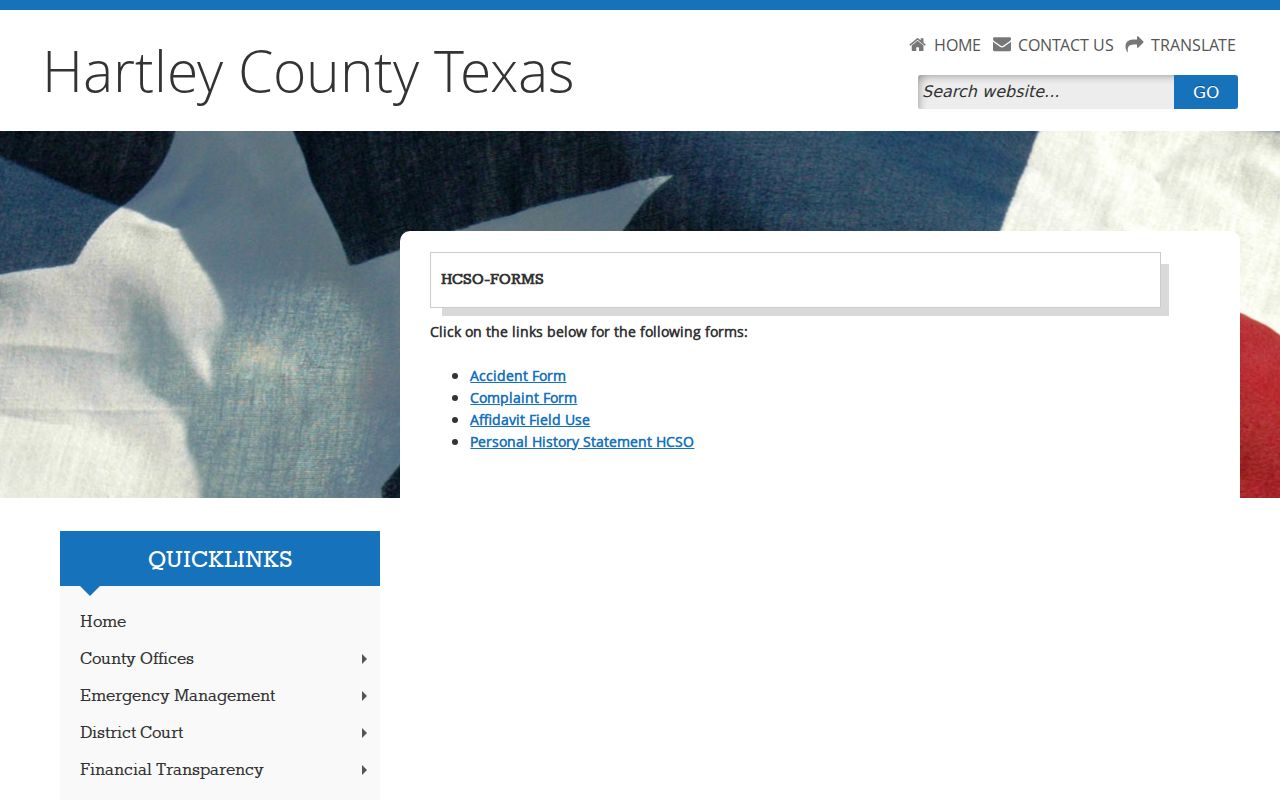
The Hartley County Sheriff's published forms cover complaints and accidents. They also cover affidavit use and employment history. They offer no public warrant lookup. The Sheriff's Office lists its Channing office and a Dalhart annex. Dalhart Police publishes a separate department contact. The Hartley County sheriff's pages show no warrant phone line, searchable portal, or bond schedule. The police page is an agency contact source, not a public warrant index. Federal fugitive matters go to the U.S. Marshals Northern District of Texas and the North Texas Fugitive Task Force. Those federal channels sit outside the Hartley Justice Court traffic list. An attorney or the issuing court can tell whether a matter is state or federal. The shared jail handles custody and dispatch contact but posts no public warrant database or bond window.
Comparing Arrest, Summons, and Bench Warrants
An arrest warrant orders an arrest, a summons directs a person to answer in court, and a bench warrant usually follows a missed court duty. Labels alone do not settle current status. A Hartley County docket tag is not the final word. A bench warrant search for Hartley County begins with the court that set the original date.
| Feature | Arrest Warrant | Summons | Bench Warrant |
|---|---|---|---|
| What it orders | Arrest by an authorized officer | Answer or appear in court | Return to court after a missed duty |
| Basis | Complaint or oath supporting probable cause | Charging or court process | Failure to appear or comply |
| Issuer | Magistrate | Court or authorized officer | Judge handling the case |
| Response | Confirm with counsel and the issuing court | Follow the stated date and instructions | Ask the court about recall or a new date |
Hartley County Federal Warrants Use Another Court
Federal warrants in Hartley County follow a different track. The county sits in the Amarillo Division of the U.S. District Court for the Northern District of Texas. PACER searches federal criminal dockets. There is no public federal list for checking yourself. Sealed papers may stay hidden. PACER access can also carry charges, set by current federal pricing and account rules. Fugitive work falls to the U.S. Marshals Service and its North Texas Fugitive Task Force. For a possible federal matter, ask a federal defense lawyer or the federal court clerk how to confirm it. County and municipal portals cannot verify federal process.
If There's an Arrest Warrant for You
Start with the issuing court and its current status. Then talk to a lawyer. Ask whether a voluntary appearance, bond, attorney bond, or motion to recall fits your case. Hartley County posts no standard bond amount, warrant surrender window, or recall form. So do not lean on the Justice PDF or an online docket for the full answer. If you are directed to appear or surrender, pin down the place, the date, required identification, the bond process, and whether the case remains pending. Keep every court and release paper. Ask whether another setting is required.
Important: Speak with counsel before going to an office or jail, and confirm the issuing court, current status, bond terms, and exact location.
Hartley County Arrest Records Need the Right Clerk
Arrest records in Hartley County start with a written public-information request to the department holding the file. Misdemeanor files from County Court sit with the County Clerk. Material from the 69th District Court belongs to the District Clerk. A request to the Sheriff's Office should describe the law-enforcement records it already holds. Be specific about the record and period sought. The county posts no warrant-specific fee schedule or fixed processing time. Executed arrest-warrant access is governed by Article 15.26, while juvenile and sealed material may remain restricted. The District Clerk page and County Clerk page link to their respective court records.
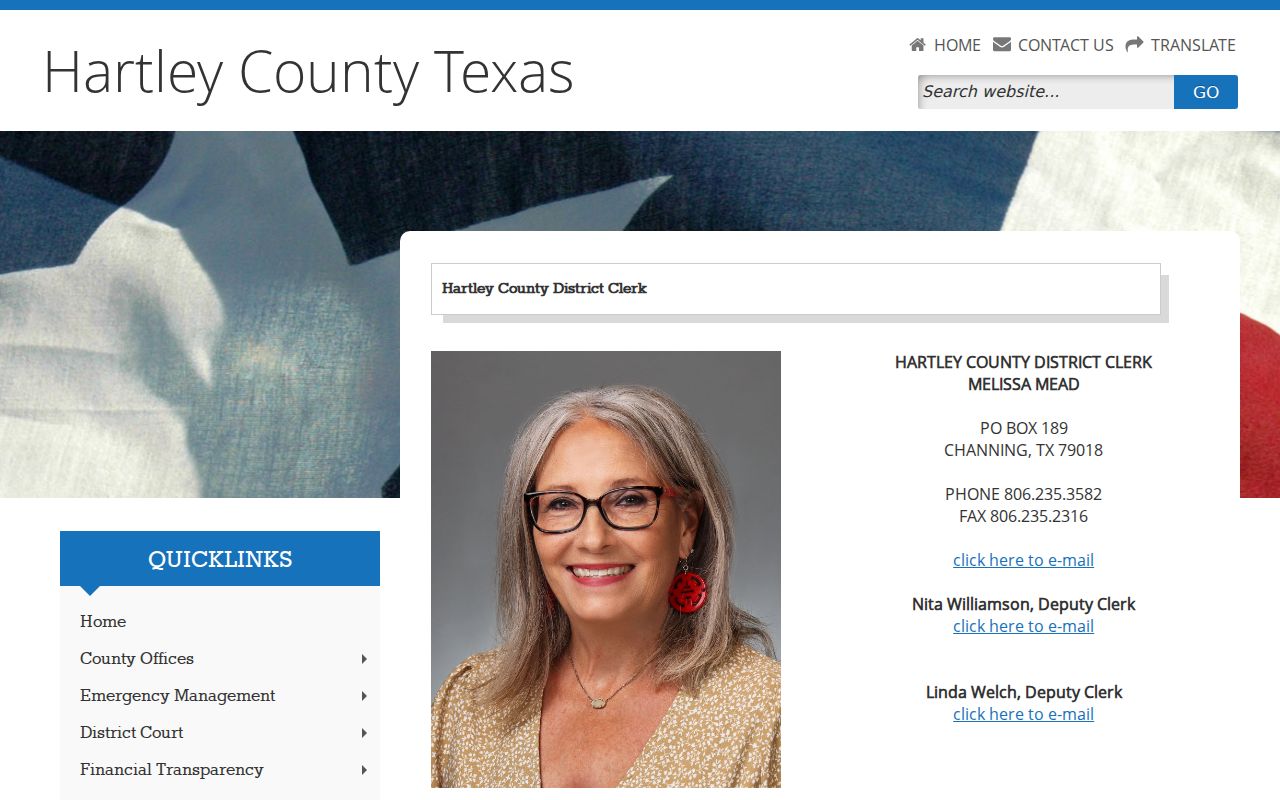
The clerk route in Hartley County identifies the court file; it does not guarantee that every warrant is public or unsealed.